
Big List, Small Results? How eCommerce Email Segmentation Changes That

Executive Summary 

  • It makes sense to want to email everyone you’ve worked so hard to collect, but sending to your whole list often means lower engagement and more unsubscribers over time.
  • eCommerce email segmentation lets you break your list into smaller groups based on things like what customers buy and how often they open your emails.
  • When emails reach customers who are genuinely interested in your products, you’re more likely to see stronger engagement and conversions. That engagement can also help support your sender reputation and email deliverability. 
  • Segmenting doesn’t necessarily mean emailing less. It gives you more opportunities to reach the right customers, as long as you regularly review your segments and adjust them as customer behavior changes. 
  • Running a store already keeps you busy, so EYStudios can handle your ecommerce email segmentation from start to finish while you focus on everything else.

Why not email everyone on your email list? It’s a fair question, and honestly, we hear it from merchants all the time. You’ve spent years building your customer base, and now there are thousands of contacts sitting in your email platform. Of course it feels like a bigger list should mean bigger revenue. That instinct makes complete sense.

Sending to your entire list can increase orders on the first send, because so many people receive it. However, the trouble tends to show up later. Engagement can drop, unsubscribes can climb, and eventually, your deliverability can suffer too. Repeatedly sending campaigns to people who aren’t interested can hurt your sender reputation. Segmenting your email list can help prevent those problems. 

Your Email List Is Not Just One List

When all of your contacts live in one big bucket, it’s easy to miss how different those people really are. Inside that single list, you likely have:

  • Customers who purchased in the last few weeks
  • Brand-new customers alongside your loyal customers
  • Shoppers who only ever buy one type of product
  • Subscribers who haven’t opened an email in six months
  • Bargain hunters who only buy during promotions
  • Customers who haven’t purchased in three years

Each of these groups wants something different from you. A message that excites a loyal customer might mean very little to someone who hasn’t thought about your store in years.

Bigger Sends Do Not Mean Better Sends

Here’s a scenario we see play out often. “Email A” goes to the whole list. It lands in a huge number of inboxes, but engagement is low and unsubscribes spike. The conversions that do come through look weak compared to the size of the audience.

“Email B” goes to a smaller group of customers who have already shown interest in the products featured. Even with fewer recipients, the campaign could see stronger click-through and conversion rates because the content is more relevant.

The benefits go beyond a single email campaign, too. Inbox providers like Gmail and Outlook pay close attention to how people interact with your emails. When large portions of your list ignore your messages or mark them as spam, your sender reputation takes a hit, and future emails are more likely to land in the junk folder. Smaller, more engaged sends help protect that reputation so the emails that matter actually reach the inbox.

eCommerce Email Segmentation Is About Relevance, Not Restrictions

We completely understand the hesitation. Segmentation can feel like you’re limiting your reach or leaving money on the table. In reality, it’s about making sure each message reaches the people who are most likely to care about it. You can build segments based on things like:

  • Interest in a specific product category
  • Local customers who can shop in person or attend regional events
  • Replenishment timing, for customers who will need a refill after a certain period
  • Customers who purchase in high volume
  • Highly engaged subscribers versus those who’ve gone quiet

Relevance is what makes someone open an email and feel like it was written with them in mind.

More Segments Mean More Reasons to Send

Segmentation doesn’t mean sending less. In most cases, it actually gives you more chances to reach customers. Rather than one generic “Shop Our Latest Products” message, you could send:

  • New arrivals in a specific category
  • A restock alert for a popular product line
  • Early VIP access to a new product
  • A friendly reintroduction to your store for customers who haven’t engaged in a while

Instead of one broad message that mostly gets ignored, you end up with several targeted emails your customers actually want to open.

Nothing Should Be “Set It and Forget It”

Customer behavior is always shifting. Someone who was a casual browser last spring might be one of your best customers today, while a once-loyal buyer may quietly drift away. A healthy ecommerce email segmentation strategy keeps up with those changes by keeping an eye on:

  • Purchase behavior
  • Browsing behavior
  • Email engagement
  • Customer value
  • Product and category interests

Regularly reviewing your segments helps you spot opportunities to bring inactive customers back and encourage first-time shoppers to purchase again. The segments that work today won’t necessarily be the ones that work six months from now, so regular reviews keep everything relevant.

How EYStudios Can Help

We know most merchants aren’t short on ideas. They’re short on time. Building segments and keeping them current takes real effort, especially when you’re also juggling inventory, fulfillment, customer service, and everything else that comes with running an online store.

That’s where our team comes in. EYStudios can handle your ecommerce email segmentation from the initial strategy through ongoing optimization. You get to focus on growing other areas of your business while your list finally starts working the way it should. If your list has grown faster than your email strategy, we’d love to talk.

FAQS

  • What is ecommerce email segmentation? 

eCommerce email segmentation is when you divide your email list into smaller groups based on things like purchase history and email engagement. This lets you send more relevant messages that each group is more likely to act on.

  • Won’t segmenting my list mean I’m emailing fewer people? 

The short answer? No. Segmentation gives you more opportunities to email customers with content they’re interested in. Instead of sending the same campaign to everyone, you can share category-specific new arrivals, restock alerts, and other updates with customers who are most likely to care. 

  • How often should I update my email segments? 

Segments should be reviewed pretty regularly, because customer behavior changes over time. Keeping an eye on purchases and engagement helps your ecommerce email segmentation stay accurate.
Black Friday Marketing: How to Turn Buyers Into Long-Term Customers

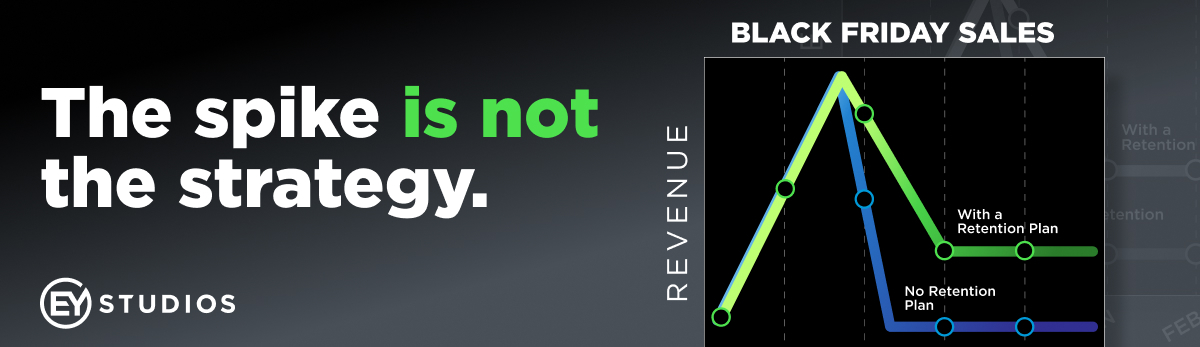
Black Friday is great at attracting customers. The bigger challenge is figuring out how to keep them. Every year, merchants invest heavily in advertising, promotions, creative, inventory, and technology designed to capture as much holiday demand as possible. Traffic spikes, orders pour in, and revenue charts move up and to the right. Then January arrives, traffic returns to normal, and many of those first-time Black Friday buyers are never heard from again.

That’s a significant missed opportunity because the real value of Black Friday isn’t simply how much revenue you generate during Thanksgiving weekend. It’s how many new customer relationships you create that continue producing revenue long after the holiday season is over.

If you’re going to spend aggressively to acquire customers on Black Friday, your marketing needs to account for what happens after that first purchase. Here are three ways to turn more of those Black Friday buyers into long-term customers.

Black Friday marketing

Executive Summary

Black Friday buys you customers. Whether they’re worth anything comes down to what you do in December, which is usually when everyone stops paying attention.

  • A first-time buyer is meeting your brand during the week your operation is stretched thinnest, and they have no idea that’s not normal for you. What they get is what they’ll assume you always do.
  • Once you know what someone bought, use it. Sending the same follow-up to everyone wastes the only real information the purchase gave you.
  • Discount your way through December, and you’ve trained them to sit and wait for the next sale.
  • Your ROAS report won’t tell you which campaigns brought back customers who bought again. Second purchase rate will, and that’s the number that should decide what you run next year.

1. Turn the First Purchase Into the Beginning of a Relationship

For many merchants, Black Friday marketing becomes the culmination of the entire year’s effort. Teams spend months preparing campaigns, building landing pages, negotiating inventory, creating ads, planning promotions, and making sure the website is ready for the surge in traffic. When the weekend is finally over, everyone understandably feels like they’ve crossed the finish line.

From the customer’s perspective, though, something very different just happened: they bought from you for the first time. That makes Black Friday marketing the beginning of the customer relationship, not the end of the campaign. Your order confirmation, fulfillment experience, packaging, shipping communication, customer service, and post-purchase marketing are all helping that customer decide whether your store was simply a good place to find a Black Friday deal or a business they want to shop with again.

This is particularly important because many new customers are meeting your brand at exactly the moment when your operation is under the most pressure. They don’t know that your warehouse normally ships faster or that your customer service team is dealing with three times its normal volume. They only know the experience they received. The promotion may have convinced them to place the first order, but the experience surrounding that order is what starts earning the second one.

Use What They Bought to Shape Your Post-Black Friday Marketing

Once they make that purchase, you also know something about them that you didn’t know before: what they’re actually willing to buy. Use that information to make what happens next more relevant.

A customer who purchased one product shouldn’t necessarily receive the same follow-up Black Friday marketing as someone who purchased something completely different. Look at which accessories, replenishment items, upgrades, complementary products, or educational content make the most sense based on what they already bought. If customers who purchase a particular product frequently return 30 days later for an accessory, build that behavior into your post-purchase marketing. If another product typically needs replenishment after 60 days, don’t wait for the customer to remember on their own.

This doesn’t require incredibly sophisticated personalization. In many cases, it’s simply recognizing that someone purchased Product A and understanding that Product B is the most logical thing they may need next. Post-purchase communication should demonstrate that you’re paying attention to what the customer bought and helping them get more value from their relationship with your brand.

Your Black Friday marketing may have driven that first order through advertising, search, a recommendation, or simply a great deal. Your job after that purchase is to give the customer a relevant reason to continue the relationship rather than dropping them into the same marketing stream as everyone else.

2. Don’t Train New Customers to Wait for Another Discount

One of the easiest post-Black Friday marketing mistakes is continuing to hammer new customers with promotions. They purchased during your Black Friday sale, then receive another discount for Cyber Monday, another promotion the following week, another coupon before Christmas, and another sale to start the new year.

Eventually, you’re teaching them how to shop your store: wait until something is discounted. Discounts can absolutely be part of an effective e-commerce strategy, but they should create a reason to act rather than become the primary reason customers buy from you. After Black Friday, your marketing should gradually shift the conversation from price to value.

Show customers what else makes your products worth owning. Introduce complementary products, demonstrate different use cases, provide helpful product education, share your brand story, and explain what makes your products different. Your goal is to give that new customer reasons to return that aren’t entirely dependent on seeing a percentage sign in the subject line.

You don’t have to stop running promotions. You simply need to become more strategic about how you use them. Instead of conditioning customers to expect blanket discounts across your entire catalog, create specific reasons to return for particular products at particular moments. A targeted promotion can introduce a customer to another part of your catalog without unnecessarily discounting everything you sell. Limited-time offers, product-specific deals, new-product launches, bundles, and other focused promotions can create urgency while still protecting the value of the rest of your assortment.

There’s an important difference between a customer who thinks, “I’ll wait until this store has another sale,” and one who thinks, “I wonder what they’re doing next.”

The second customer is paying attention to your brand rather than simply waiting for your prices to drop.

3. Measure Black Friday by What Customers Do Next

Black Friday marketing reports tend to focus on the numbers immediately in front of us: revenue, orders, conversion rate, average order value, return on ad spend, and year-over-year growth. Those metrics obviously matter, but they don’t tell you the entire story.

If you want to understand the real value of your Black Friday strategy, keep watching those customers after the sale ends. Look at how many first-time buyers make a second purchase, how long it takes them to return, what they purchase next, how their average order value changes, and which acquisition channels or promotions produce the strongest repeat behavior.

You may discover that the promotion generating the biggest revenue number on Black Friday isn’t actually producing your most valuable customers. A deeply discounted campaign might create a flood of one-time buyers who never return, while another campaign with a slightly higher acquisition cost produces customers who purchase several more times throughout the following year.

That information should also influence what you do next Black Friday. If certain products consistently introduce customers who go on to make additional purchases, those products may deserve a bigger role in your acquisition strategy. If another promotion generates impressive order volume but almost no repeat business, that’s worth knowing before you invest even more heavily in it next year.

This is where customer lifetime value becomes much more important than the excitement of a single weekend’s revenue report. The goal isn’t simply to acquire the largest possible number of customers. It’s to acquire customers you have a realistic opportunity to keep.

Black Friday Marketing Is the Introduction

There’s nothing wrong with using aggressive promotions to acquire customers during Black Friday. That’s part of what makes the event so powerful. All that advertising and promotional spending is ultimately buying you an opportunity to start a relationship with a large group of new customers.

The sale gets them through the door. What happens afterward determines what those customers are actually worth. The brands that get the most from Black Friday marketing aren’t necessarily the ones that generate the biggest spike in November. They’re the ones that are still generating revenue from those customers next November. If you want to get started on your Black Friday marketing, EYStudios can help. Contact us today to get started!

FAQ’s

How Soon After Black Friday Should I Start Marketing to New Customers Again?

You already are with order confirmation, shipping notification, and delivery follow-up. That’s marketing whether you think of it that way or not. What you’re really asking is when to pitch something new, and that depends on what they bought. If it’s something they’ll run out of, a couple of weeks is fine. If it took them three weeks of research to buy it the first time, give it longer. The thing to avoid is going straight from your Black Friday sale to your Cyber Monday sale to your holiday sale with nothing else in between.

Should I Stop Running Promotions After Black Friday?

Not at all. It’s the sitewide 20% off every few weeks that causes the damage, because at that point your regular prices are just a suggestion. A promotion on one product, a bundle, or a launch gives someone a reason to come back without touching the value of everything else you sell. Before you run anything, ask whether it’s built around something specific or you’re just discounting the store again.

What Metrics Tell Me Whether Black Friday Actually Worked?

Second purchase rate, mostly, and hardly anyone tracks it. Pull the percentage of first-time Black Friday buyers who came back, how long it took, and break it out by channel and by what they bought first. What usually turns up is that your biggest revenue campaign brought in people who never returned, while some smaller campaign you almost cut produced buyers who kept ordering all year. ROAS won’t show you any of that.

22 Years of Adaptation in eCommerce Business

Executive Summary

Comfort is the real risk in ecommerce business, not change: When business is going well, it’s tempting to leave things alone. But markets keep moving regardless, and the ecommerce business owners who wait until they’re forced to adapt are usually already behind.

Adaptation should come from listening, not imitation: The strategies that work for one ecommerce business won’t necessarily work for another. Real change comes from paying attention to your own customers, employees, and market, not copying what worked somewhere else.

Flexibility has to be built into how an ecommerce business operates, not bolted on when needed: The larger and more rigid an organization gets, the harder it is to pivot when the moment calls for it. Building that adaptability in early, before you need it, is what lets a company respond quickly when it counts.

Adaptation in eCommerce Business

Twenty-two years ago, I started EYStudios with little more than a computer and a passion for illustration. Back then, I wasn’t trying to build an agency. I was creating illustrated logos and mascot designs because that’s what I loved to do and where my skills were strongest.

If you had told me that 22 years later we’d have a talented team helping ecommerce brands across the country with design, development, strategy, marketing, and optimization, I never would have believed you. None of that was part of some grand ecommerce business plan.

Looking back, I’ve realized something key about  EYStudios and myself: Celebrating 22 years isn’t really about longevity. Plenty of companies have been around for decades. What I’m most proud of is that we’ve spent the last 22 years learning when to hold our course — and when to change it.

Adaptation Has Always Been the Story of EYStudios

Our first major pivot came because our clients asked us to do more. Businesses that trusted us with their logo work started asking if we could also create brochures, advertisements, and other marketing materials. We listened, expanded our services, and before long, another opportunity appeared in the ecommerce business space.

Those same clients needed websites. That meant hiring designers whose strengths were different from my own. As those projects became larger and more sophisticated, we began bringing developers into the company so we could offer complete ecommerce solutions instead of simply creating beautiful designs. Each step built naturally upon the one before it.

None of those changes happened because we were chasing trends. They happened because our customers’ needs evolved, and we believed it was our responsibility to evolve alongside them. That philosophy shaped some of the biggest decisions we’ve ever made.

In the mid-2000s, Yahoo! Merchant Solutions was one of the biggest names in ecommerce. We started as one of their smallest partners and eventually became their largest. It would have been easy to stay comfortable. After all, things were going well! The problem is that markets don’t stand still.

We began to see where the industry was heading, and rather than waiting until we were forced to react, we started investing in emerging platforms like BigCommerce and Magento, which would later become part of Adobe. As Shopify and other technologies gained momentum, we expanded there as well. Throughout the years, we’ve continued adding strategic partnerships, always looking for companies that could help us serve our merchants better.

Some of those partner companies have adapted successfully. Others haven’t. There’s a huge lesson in that we can all observe in the ecommerce business adaptation.

ecommerce agency

One of the Biggest Obstacles to Innovation is Often Success

When business is good, it’s easy to ask, “Why change what isn’t broken?” Unfortunately, the market doesn’t care whether you’re comfortable. Customer expectations continue to evolve. Technology continues to deepen. Instead of staying fixed on targets, your competitors continue to pivot.

Standing still is often the biggest risk of all.

One thing we’ve learned after working with hundreds of merchants is that adaptation looks different for every business. Since every company’s DNA is unique, what works brilliantly for one brand may completely miss the mark for another. Some businesses grow by expanding product lines, others by narrowing their focus. Some compete through customer service, others through product innovation or operational excellence.

The goal isn’t to copy someone else’s strategy. You read a book or watch a lecture they’re giving, and it inspires you to do the same thing. However, that worked for them, not you. Maybe it can work, but it’s important to understand your own business well enough to recognize when something truly needs to change.

Something Else Begins to Happen: You Develop an Instinct in eCommerce Business

After enough years in business, you start noticing patterns before they become obvious to everyone else. You hear similar questions from different clients. You see changes in customer behavior. You notice technologies gaining traction before they become mainstream. It’s difficult to explain exactly how that instinct develops, but experience has a way of sharpening your awareness.

I’ve also learned that ignoring that instinct usually comes at a major cost. Sometimes you have to trust what years of experience are telling you, even when everything appears to be going well.

I’ve also become convinced that businesses need to build cultures that allow them to pivot. The larger and more rigid an organization becomes, the harder it is to respond when change is necessary. It’s often the giant ships that struggle to avoid the iceberg because they simply can’t turn quickly enough.

Change for the Sake of Change is Just as Dangerous.

I’ve seen businesses redesign brands, replace systems, or chase the latest trend simply because they felt like they needed to do something. Meaningful adaptation isn’t about momentum or sheer movement. It’s about making intentional changes that solve real problems or create new opportunities.

Sometimes businesses adapt to the wrong things altogether. One example I see frequently in e-commerce is merchants who build their business around the limitations of their technology instead of selecting technology that supports the needs of their business. Over time, those artificial limitations become accepted as reality, even though they don’t have to be.

The best adaptations always begin by listening:

Listening to your customers.

Listening to your employees.

Listening to your industry.

Listening to what the market is trying to tell you.

One of the biggest adaptations we’ve made over the past few years had nothing to do with technology. Following the COVID era, we made the decision to move from a traditional office to a work-from-home model. That wasn’t an easy adjustment for me personally because I genuinely enjoy face-to-face collaboration and the energy that comes from working together in the same room.

Remote Work, Stronger Relationships

What we’ve gained, however, has been tremendous. We’re no longer limited to hiring talent only within driving distance of Atlanta. We’ve been able to build a stronger team by finding great people wherever they live. We’ve also become much more intentional about traveling to visit merchants, attending more industry events, and making those in-person interactions count when they happen. Ironically, working remotely has encouraged us to spend even more meaningful time with our clients.

As I think about the businesses that have worked with us for years, I realize they all have something in common. They don’t chase every shiny object, but they also don’t cling to the past simply because it’s familiar. They ask questions. listen to their customers. They challenge assumptions. They aren’t afraid to evolve when the evidence tells them it’s time.

Adaptation is More Important Than Ever in the eCommerce Business Space

Twenty-two years ago, businesses were adapting to the rise of e-commerce itself. Today, we’re navigating artificial intelligence, rapidly changing commerce platforms, shifting customer expectations, and ongoing economic uncertainty. The tools are different, but the lesson hasn’t changed. The companies that thrive won’t necessarily be the biggest, the oldest, or even the smartest. They’ll be the ones willing to listen, learn, and adapt before change is forced upon them.

To every client who’s trusted us over the past 22 years, thank you. To our technology partners who’ve helped us better serve those clients, thank you. To every member of the EYStudios team, past and present, thank you for helping shape this company into what it is today.

We’re proud to still be privately owned after all these years, something that’s becoming increasingly rare in our industry. We’re equally proud that we still have the freedom to evolve in the ecommerce business space. In the months ahead, you’ll see some exciting changes from us that continue this philosophy of adaptation, all with one goal in mind: serving our clients even better. After 22 years, one thing has become abundantly clear:

Adaptation isn’t something a successful business does occasionally. It’s something successful businesses build into their DNA.

On to the next chapter!

FAQ’s

What Does it Mean to Adapt in an eCommerce Business?
Adapting in an ecommerce business means changing your services, technology, or strategy in response to what your customers and the market actually need, not just following trends. It’s less about reacting to problems and more about staying ahead of them before they force your hand.

Why Do So Many eCommerce Businesses Struggle to Adapt Even When They See Change Coming?
Larger, more established ecommerce businesses tend to get comfortable when things are going well, which makes them slower to pivot when the market shifts. The bigger and more rigid the organization, the harder it is to turn quickly, even when the signs are obvious.

How Can an eCommerce Business Know When It’s Time to Change Direction?
The best signal usually comes from listening closely to customers, employees, and industry trends rather than copying what worked for another ecommerce business. Patterns tend to show up in client questions and shifting customer behavior well before they become obvious to everyone else.

Black Friday Strategy Pep Talk: Don’t Wait Until the Last Minute to Plan

Executive Summary 

Twenty-two years of Black Friday seasons, and the pattern hasn’t changed. Brands that win don’t necessarily have the biggest discount on November 27th. Usually, they just started planning back in June.

  • Most teams are still scrambling in late October to throw together homepages and email campaigns. The brands actually winning Black Friday locked in inventory, paid ads, and customer service scripts months earlier.
  • A sitewide blowout sale will move product for a weekend. It will also train your customers to wait for the next markdown rather than buy because they actually value what you sell.
  • When support keeps fielding the same shipping and promo questions over and over, that’s your website telling you something. Fix it in July and you won’t be firefighting it in November.

Black Friday Stategy Starts Now

Hard to believe, but 2026 will be year 22 of our team helping ecommerce brands with Black Friday strategies. Some have been record-breaking successes. Others have been painful lessons. In all this time, I’ve noticed something that repeats itself every single year:

Around late October, the panic starts.

“We need a Black Friday homepage.” “Can we get an email campaign together?” “We should probably decide on a promotion.”

The problem isn’t that these are bad ideas. It’s that by the time you’re asking those questions, you’re already playing catch-up. Meanwhile, your competitors aren’t just thinking about Black Friday strategy. They’re building toward it.

Their inventory has been reviewed, last-minute surprises are factored in, and landing pages are in development. On the marketing side, their paid ads are scheduled, the email calendar is approved, and content has already begun. Their customer service team knows what promotions are coming, and their shipping policies are finalized.

While jitters happen no matter how much you plan, merchants, as I described above, are calm. Success doesn’t come because they’re lucky; they just started earlier.

Black Friday Strategy Doesn’t Start on Black Friday

We know this already, because we see countless reminders. Yet, how does that impact our preparedness?

Customers don’t wake up on Black Friday and suddenly decide they need a new rifle scope, stereo receiver, golf club, train set, knife, or pair of boots. Many of them have been researching for weeks. They’re watching YouTube reviews, comparing products, reading buying guides. They’re signing up for emails and building wish lists.

They’re doing what I call “orbiting the brand.” They’re close enough to buy, but they’re waiting for the right reason, the right price, or simply the right moment. By the time Thanksgiving rolls around, many shoppers have already decided what they want. Black Friday just determines where they buy it.

That’s why your preparation matters so much.

Bad Discount Strategy Can Damage Your Brand

One of the biggest misconceptions I see is that Black Friday strategy success comes down to having the biggest promotion. Every year, I see the same meeting happen: “Let’s just throw a site-wide discount on everything and call it a day.”

The problem with this is that it isn’t really a Black Friday strategy. You have nothing to follow it up with for a season-long promotion once you go that big. Meanwhile, you may be training customers to associate your brand with waiting for discounts instead of buying because they value what you sell. If you rinse and repeat this process, why would your customers ever shop with you beforehand?

Proper discounting for Black Friday comes down to execution. Picking the right categories or specific items to put on sale is critical to making the promotion work while preserving your brand integrity.

Your Website Should Answer Questions Before Customers Ask Them

Yes, of course, you need to fix glaring holes in your store’s shopping experience well before Black Friday begins. However, one of the biggest deficiencies involves messaging.

A fantastic, planned-in-advance strategy can still fail if customers can’t figure out key elements of your promotion. When does it start and end? Is there anything coming up after this that they should be aware of? When are the key shipping deadlines?

If your customer service team is answering the same questions over and over during Black Friday, your website probably isn’t.

Just as you are (hopefully) establishing landing pages for your promotions, you should also create intuitive pages to address key details. While quick blurbs work on homepages, as well as category, product, and checkout pages, they might link to other layouts that go into greater detail.

Okay, okay, here’s my pep talk:

If you’re reading this in the summer, congratulations! You’re not behind. You’re early. That’s exactly where you want to be.

Don’t wait until November to discover your website is slow. Don’t wait until Thanksgiving week to build your gift guides. Don’t wait until your competitors fill inboxes before you’ve decided what you’re going to say.

Use this time wisely, review your analytics, and address key messaging that will work alongside your promos.  Talk with your team about the plan and improve it. By the time November rolls around, you’re not trying to figure anything out. You’re executing.

EYStudios Can is Here for Your Black Friday Strategy

After more than two decades helping ecommerce brands prepare for the holiday season, I’ve learned one simple truth: Black Friday doesn’t reward the fastest teams. It rewards the teams that started first.

You can do it!

FAQ’s

  • When Should We Actually Start Planning for Black Friday? 

You should start planning in June and July. If you’re waiting until your competitors start asking about homepages and email campaigns, you’ve already missed the window, because by then they’ve got inventory reviewed, ads scheduled, and landing pages live.

  • Is a Sitewide Discount the Best Black Friday Promotion Strategy? 

No, and it might even hurt you long-term. A blanket discount moves product for a weekend, sure, but it teaches customers to wait around for the next markdown instead of buying because they actually like what you sell. And once you’ve gone that big, where do you go from there for the rest of the season?

  • What Should our Website be Doing That it Might Not be Doing Already? 

Answering questions before customers have to ask them. When does the promotion start and end? What are the shipping deadlines? Is something else coming after this? If your support team is fielding the same three questions on repeat, your website isn’t doing its job yet.

Recovering Abandoned Carts: 8 Email Strategies

The challenge of abandoned shopping carts remains a common hurdle for untold thousands of ecommerce businesses. However, with the right email strategies, you can turn these missed opportunities into successful conversions. Below, we present effective email techniques to recover abandoned carts and breathe new life into your e-commerce sales.

Executive Summary

  • Send a sequence, not a single email. A friendly reminder shortly after an abandoned cart, then a follow-up email with an added incentive, works better than one message.
  • Personalization drives opens and clicks. Use the shopper’s first name, the products they left behind, and recommendations based on what they browsed.
  • Dynamic content pulls the exact abandoned items into the email, which keeps it relevant and saves manual work.
  • Discounts and limited-time offers create urgency, but they cost margin, so use them in the second or third email rather than the first.
  • Reviews, testimonials, and trust badges address the hesitation that often caused the abandonment in the first place.
  • One clear call to action button, with specific language like “Complete Your Purchase,” makes it easy to return to checkout.
  • A/B test subject lines, copy, images, and offers, then let the analytics guide the next round.

1) Craft Compelling Abandoned Cart Emails

The cornerstone of any successful recovery strategy is a well-crafted abandoned cart email. Keep these emails concise, visually appealing, and personalized. Include high-quality images of the abandoned products, a clear call-to-action button, and persuasive copy that highlights the value of the items left behind. Consider incorporating a sense of urgency to prompt immediate action.

2) Implement Timely Email Sequences

Timing is everything in the world of abandoned cart recovery. Set up a sequence of automated emails triggered at strategic intervals. Start with a friendly reminder shortly after the abandonment, followed by a second email with additional incentives, such as limited-time discounts or exclusive offers. Tailor the frequency based on your industry and customer behavior.

3) Go for a Personal Touch

Personalized emails have a higher chance of grabbing attention. Address customers by their first name, reference the abandoned products, and make tailored recommendations based on their browsing history. The more personalized and relevant your emails, the greater the likelihood of rekindling their interest in completing the purchase.

4) Include Dynamic Content for Product Display

Leverage dynamic content in your emails to showcase the exact products customers left behind. This not only captures their attention but also provides a seamless and visually engaging experience. Dynamic content ensures that your emails are highly relevant, increasing the chances of re-engaging customers.

5) Incentivize with Discounts and Offers

One of the most effective ways to entice customers back to their abandoned carts is by offering exclusive discounts or special promotions. Consider including time-sensitive offers to create a sense of urgency. Make sure to clearly communicate the value of these incentives to motivate customers to complete their purchase.

6) Feature Social Proof and Trust-Building Elements

Instill confidence in your customers by incorporating social proof and trust-building elements in your emails. Include positive reviews, testimonials, or trust badges to reassure customers about the quality of your products and the reliability of your service. Building trust is essential in overcoming any reservations that led to the initial cart abandonment.

7) Display Clear and Visible Call-to-Action (CTA)

Ensure that your abandoned cart emails have a clear and compelling CTA. The CTA button should stand out, making it easy for customers to resume their checkout process with a single click. Use persuasive language, such as “Complete Your Purchase Now” or “Get Your Items Today,” to drive action.

8) Employ A/B Testing for Continuous Improvement: Abandoned Carts

Embrace continuous improvement by conducting A/B testing on various elements of your abandoned cart emails. Experiment with different subject lines, email copy, images, and incentives to identify what resonates best with your audience. Use analytics to track performance and refine your strategies over time.

By crafting compelling, personalized emails, implementing timely sequences, and incorporating elements that build trust, you can significantly increase the chances of converting abandoned carts into successful sales. Remember, the key is to adapt and refine your strategies based on data and customer feedback to create a seamless and engaging recovery experience.

Need help implementing these sales recovery strategies into your email campaigns? Click here to let us know!

FAQ’s

How many abandoned cart emails should you send?

Three emails work for most ecommerce stores. Send the first within one to three hours of abandonment, the second after 24 hours, and the third between 48 and 72 hours. Sending more than three usually increases unsubscribes without adding much recovered revenue, though testing your own sequence length is worthwhile.

Should you include a discount in an abandoned cart email?

Not in the first email. Many shoppers abandon over shipping costs or simple distraction, so a reminder alone recovers a portion of them without costing margin. Hold the discount for the second or third message, and keep it time-limited so shoppers do not learn to abandon carts deliberately to trigger the offer.

What is a good abandoned cart email open rate?

Abandoned cart emails typically outperform standard promotional sends because the shopper already showed purchase intent. Open rates commonly land between 40 and 50 percent, with click rates around 8 to 10 percent. Compare your results against your own promotional averages rather than industry benchmarks, since these vary widely by product category and price point.

Cookieless Marketing: How to Navigate This

For years, ecommerce businesses were told to prepare for a cookieless web. The reality turned out to be much messier. Third-party cookies did not disappear on schedule, but tracking has quietly degraded anyway, and many brands are feeling the effects without knowing why. Below we look at where cookies actually stand, what it means for your advertising and measurement, and three steps to take now. We’re going to uncover how to navigate cookieless marketing in today’s era. 

Executive Summary

The cookieless future did not arrive the way the industry expected, but the pressure on cross-site tracking is real. Safari, Firefox, and Brave still block third-party cookies by default, putting roughly 17-20% of global traffic out of reach regardless of what Chrome does. In Chrome, cookies remain functional but have grown less reliable as more users opt into stricter privacy settings, shrinking remarketing audience pools and lowering match rates. This blog explains where tracking actually stands, what it means for ecommerce advertising and measurement, and three steps businesses should take now. 

  • Chrome reversed its deprecation plan, so third-party cookies are not disappearing on a deadline. The degradation is gradual instead of sudden.
  • Cookie-based targeting is already broken for a meaningful share of traffic, since Safari and Firefox never stopped blocking.
  • First-party data is still the right investment. Loyalty programs, email lists, and customer accounts give you information that no browser policy can take away.
  • Contextual targeting, which places ads based on page content rather than user history, works independently of any tracking technology.
  • Consent requirements under GDPR and similar laws apply no matter what browsers do, so compliance work does not go away because Chrome keeps cookies.
  • Attribution reporting will keep getting less precise. Plan measurement around modeled and first-party signals rather than exact cross-site conversion paths.

The Possible Cookieless Marketing

Cookies have been the backbone of online tracking and user targeting for years, and concerns about privacy pushed browsers to reconsider them. Safari, Firefox, and Brave now block third-party cookies by default, and they have done this for a while. That alone puts a significant share of web traffic beyond the reach of cookie-based tracking.

However, Chrome took a different path. Google spent six years preparing to remove third-party cookies, and then announced in April 2025 that it would not proceed. In October 2025, it shut down most of the Privacy Sandbox APIs it had built as replacements. Third-party cookies remain on by default in Chrome, with users able to disable them in Privacy and Security settings. The practical result is a split web. Cookies still function for many users, but not consistently enough to build a strategy around.

Impact on eCommerce Businesses

Targeted Advertising Challenges: Cookieless Marketing

The challenge for advertisers is not that cookies stopped working. It is that they work unevenly, which is harder to detect. Safari and Firefox users never enter your remarketing pools, and a growing number of Chrome users have turned on stricter privacy settings. This makes audience sizes shrink, and match rates fall gradually, so performance erodes without an obvious cause. Businesses that assume nothing has changed tend to notice the problem only after several quarters of declining results.

The Case for First-Party Data

Because cookie reliability varies by browser and by user setting, first-party data has become the only foundation you fully control. This is information customers give you directly through accounts, email signups, purchases, and loyalty programs. It doesn’t depend on any browser policy, and it powers the channels where ecommerce brands see the strongest returns, particularly email. Building direct relationships with customers is no longer a hedge against a future deadline. It is how you replace what is already being lost.

Privacy Expectations and Consent Requirements

Browser behavior is only part of the picture. Consent requirements under GDPR, ePrivacy, and CCPA apply regardless of what Chrome decides, so compliance work does not go away because cookies survived. Brands that are transparent about what data they collect and are clear about what customers get in return tend to see their users have higher opt-in rates. That trust translates directly into a larger and more usable first-party dataset.

Rethinking Measurement

Attribution built on cross-site cookie data is getting less precise every year, and no single replacement has emerged. Google’s Privacy Sandbox alternatives were largely discontinued, which means the industry is working with modeled conversions, first-party analytics, and server-side tracking rather than one standard. eCommerce businesses should expect less granular reporting and build their measurement around signals they own, such as post-purchase surveys, customer accounts, and email engagement.

Navigating Cookieless Marketing – 3 Essential Tips

Invest in First-Party Data Collection

eCommerce businesses should proactively invest in methods to collect first-party data. This can include loyalty programs, newsletters, and personalized user accounts that encourage users to share their preferences willingly.

Explore Alternative Targeting Methods

As traditional targeted advertising methods decline, businesses should explore alternative targeting methods, such as contextual advertising based on the content a user is currently viewing. Collaborations with influencers and content creators can also become valuable in reaching specific audiences.

Prioritize User Trust and Transparency: Cookieless Marketing

Building and maintaining trust will be paramount in the cookieless marketing era. eCommerce businesses should be transparent about their data collection practices, clearly communicate the value proposition for users, and prioritize user consent in data-sharing processes.

The shift to a cookieless system marks a pivotal moment for ecommerce businesses. While challenges are evident, this transition also presents an opportunity for businesses to redefine their strategies, prioritize user privacy, and foster direct relationships with their audience. By embracing innovative approaches and adapting to the changing digital landscape, ecommerce businesses can thrive in the cookie-less future.

Contact us to learn more about how EYStudios can help!

FAQ’s

Are third-party cookies going away?

Not on a fixed deadline. Google reversed its Chrome deprecation plan in April 2025, so third-party cookies remain on by default there. Safari, Firefox, and Brave still block them entirely, meaning a meaningful share of web traffic is already cookieless. The shift is gradual erosion rather than a single cutoff date.

Why is my remarketing audience shrinking if cookies still work?

Because cookies only work in some browsers. Safari and Firefox users never enter your remarketing pools, and a growing number of Chrome users have enabled stricter privacy settings. Your audience sizes and match rates decline steadily even though nothing was formally removed, which makes the drop easy to miss.

What is first-party data and why does it matter now?

First-party data is information customers share with you directly through accounts, email signups, purchases, and loyalty programs. Unlike cookie data, it belongs to you and survives any browser policy change. It also powers personalization and email targeting, which is why ecommerce brands are prioritizing it over cross-site tracking.

Omnichannel Strategies in 2024: What to Expect

The world of online retailing is always evolving, and 2024 is poised to witness a significant acceleration in omnichannel strategies. As technology continues to evolve and consumer expectations rise, e-commerce brands are recognizing the need to seamlessly integrate online and offline experiences. This shift is not only transforming customer experience but also reshaping shopper behavior and prompting organizational changes within the e-commerce sector.

Impact on Customer Experience

One of the key drivers behind the surge in omnichannel retail is the heightened focus on delivering a superior customer experience. In 2024, consumers expect a seamless journey across various touchpoints, whether online or offline. E-commerce brands are investing heavily in technologies such as augmented reality, virtual reality, and artificial intelligence to create immersive and personalized experiences for their customers. For instance, virtual try-on experiences for clothing or AR-enhanced product demonstrations are becoming increasingly common, enhancing customer engagement and satisfaction.

Shopper Behavior in the Omnichannel Era

The acceleration of omnichannel retail is reshaping shopper behavior in profound ways. Consumers today are more likely to research products online, visit physical stores to experience them firsthand, and then make the final purchase through digital channels. The integration of online and offline touchpoints allows customers to switch between channels seamlessly, providing them with the flexibility to choose the most convenient and satisfying shopping journey. Brands that successfully navigate this shift in shopper behavior will gain a competitive edge by meeting customers where they are and providing a cohesive experience.

Changes to Organizational Structure

E-commerce brands are rethinking their organizational structures to adapt to the omnichannel landscape. Traditional silos between online and offline teams are being dismantled, and companies are adopting a more holistic approach to their operations. Cross-functional teams are becoming commonplace, ensuring that departments such as marketing, sales, and customer service work collaboratively to deliver a unified brand experience. Additionally, there is a growing emphasis on talent with expertise in both e-commerce and physical retail, as well as professionals capable of leveraging data analytics to optimize omnichannel strategies.

Technology Integration and Data Analytics

In 2024, the integration of technology and data analytics is a cornerstone of successful omnichannel retail. E-commerce brands are leveraging advanced analytics to gain insights into customer behavior across multiple channels. This data-driven approach enables businesses to make informed decisions regarding inventory management, personalized marketing, and targeted promotions. Furthermore, the seamless integration of data from online and offline sources allows for a more accurate understanding of customer preferences, leading to more effective and personalized customer interactions.

As 2024 accelerates forward, so will the impact omnichannel makes for online retailers. By prioritizing customer experience, understanding evolving shopper behavior, and adapting organizational structures, e-commerce brands are positioning themselves for success in this omnichannel era. The integration of technology and data analytics will continue to play a pivotal role, empowering brands to stay agile and responsive to the ever-changing expectations of modern consumers. Embracing the future of omnichannel retail is not just a strategic choice; it is a necessity for staying relevant and thriving in the competitive world of e-commerce.

Need help from EYStudios to develop your omnichannel strategy? Register for your free omnichannel consultation here!

The Importance of E-Commerce Branding

In the ever-evolving landscape of e-commerce, where countless options compete for consumers’ attention, the importance of branding cannot be overstated. Beyond just a logo or a catchy tagline, branding plays a pivotal role in shaping the perception of your online store and fostering trust and loyalty among users. Let’s look at the key reasons why branding is indispensable in the world of e-commerce.

First Impressions Matter:

Your brand is often the first interaction a potential customer has with your online store. A well-defined brand identity creates a positive and memorable first impression. Consistent branding across your website, social media, and marketing materials establishes a cohesive and professional image, instilling confidence in users.

Building Trust:

Trust is a currency in e-commerce. Users are more likely to make a purchase from a brand they trust. A strong brand communicates reliability, quality, and authenticity. Customer reviews, testimonials, and a transparent approach to business contribute to building trust. When customers trust your brand, they are more likely to return for future purchases.

Differentiation in a Crowded Market:

E-commerce markets are often saturated with similar products and services. A distinctive brand sets you apart from the competition. Clearly communicating your unique value proposition, whether it’s exceptional customer service, sustainable practices, or innovative products, helps users remember and choose your brand over others.

Emotional Connection:

Brands that evoke emotions create lasting connections with users. Consider the emotional impact you want your brand to have and infuse that into your messaging and visuals. Whether it’s humor, inspiration, or a sense of community, forging an emotional connection fosters brand loyalty and advocacy.

Repeat Business and Loyalty:

A successful e-commerce brand is not just about making one-time sales but cultivating repeat business. A well-branded experience encourages customer loyalty. Loyalty programs, personalized communication, and consistent brand engagement contribute to long-term customer relationships.

Ease of Recognition:

In a world bombarded with information, a recognizable brand stands out. A distinctive logo, color scheme, and overall design contribute to instant recognition. This is particularly crucial in online environments where users may quickly scroll through numerous options. A strong brand ensures that users remember your store when making purchasing decisions.

Word of Mouth and Referrals:

Happy customers become brand advocates. A positive and memorable brand experience prompts users to share their satisfaction with others. Word of mouth and referrals can be powerful drivers of new business. Encourage and leverage customer testimonials and user-generated content to amplify your brand’s reach.

The importance of branding in e-commerce extends far beyond aesthetics. It is a strategic investment in building a relationship with your audience. By focusing on creating a consistent, trustworthy, and memorable brand, you not only attract customers but also cultivate a community of loyal supporters who contribute to the sustainable growth of your online store.

If you have any questions on how you can further develop your online brand, let us know!

2024 E-Commerce Branding Trends: Storytelling & More

As we are now full-on into 2024, it’s a good time to look over some of the brand trends that e-commerce companies are already adopting. This year will continue the momentum 2023 saw, where marketers continue to humanize their brands through a variety of strategic techniques.

Storytelling in E-Commerce Experiences

In 2024, consumers yearn for more than just products; they crave meaningful experiences and connections with the brands they choose. A survey conducted by the Content Marketing Institute reveals that 68% of consumers feel more positive about a brand after engaging with its content. This underscores the significance of weaving storytelling into your e-commerce strategy. Craft authoritative narratives that illuminate your brand’s journey, values, and the human engine behind your products. By sharing customer success stories and showcasing the real impact of your offerings, you transform transactions into memorable interactions, forging a deeper connection with your audience.

Motion Design in Social Media

Are you looking for a way to jazz up your social media approach this year? In 2023, EYStudios clients saw tremendous results by incorporating motion into their marketing. As mentioned above, brands need to integrate effective storytelling, and motion design is a great way to accomplish that.  Studies indicate that social media users are 40% more likely to engage with content that incorporates dynamic visuals. Embrace animations, GIFs, and short videos on platforms like Instagram, Facebook and TikTok to tell your brand story in a visually captivating manner.

AI… and Authenticity?

AI has transitioned from a futuristic notion to a formidable force reshaping the e-commerce realm. According to a recent study from Absolunet, around 28% of top-tier e-commerce companies are already implementing AI and machine learning platforms into their content creation processes. But, how does a machine accomplish the brands wanting to inject humanity into their experiences? The short answer is that it can’t—at least not fully. AI is a great way to develop content, but a human at the helm is the only way to truly resonate with hearts in a meaningful manner. Taking the “people element” out is a sure way to make any AI efforts feel tone-deaf in a world where your audience craves authenticity.

Pantone’s Color of the Year 2024: Peach Fuzz!

Pantone 13-1023 Peach Fuzz

No, we’re not suggesting you rebrand your color scheme to go with the Pantone flow (but hey—if it works!). What we are suggesting is that you continue to be mindful of the effect of color in your e-commerce experiences. One of the most common areas of correction we have to make at EYStudios concerns the use of color. Customers instinctively make shopping decisions through their emotional response to color, so it’s critical to make that a key part of your continued branding strategy this year.

For help on how to incorporate these strategies and many others into your branded e-commerce experience, get in touch with us! 

Black Friday Blitz! 3 Last-Minute Holiday Social Media Tips

What? You’ve put off Black Friday and Cyber Monday social marketing AGAIN? What is this—last year, or something?

Don’t feel bad. You’re part of an elite club of e-commerce lag-behinds, and EYStudios is here to offer three tips to get your social media in shape for the big event. Think of it as a procrastinator perk!

Countdown Like Crazy!

You think you feel bad for dragging your feet on your social media? Well, it’s time to make your customers feel that same sort of overwhelming anxiety—if they don’t get off their butts and buy your products before the countdown ends!

As the clock ticks down to Black Friday and Cyber Monday, use that over-hyped media misery to your advantage. Social media is made to capitalize on that built-in urgency—all you have to do is make it fun!

Here’s how:

Teasers: Before we get to countdowns, don’t forget to tease that thing. If you expect your audience to only get excited on the day the deal hits, you’re missing out. Start teasing them about the upcoming deals and discounts early and often. Share cryptic hints or glimpses of the products that will be on sale. Build curiosity and generate buzz around your store’s offerings.

Countdowns: Yep, that’s right. We unabashedly use countdown timers because they work. Don’t @ me, bro.

Create visual countdowns using images or videos that remind your followers of the approaching shopping days. Daily countdown posts can remind potential customers of your upcoming deals and build a sense of urgency. Check out what we did for our customer DLTTrading.com by incorporating an awesome countdown clock into their “12 Days of Christmas” Promo:

DLT 12 Days Timer Screenshot

Story Highlights: Use Instagram and Facebook Stories to create a dedicated “Black Friday/Cyber Monday” highlight reel. This will allow your audience to easily access and review your promotions, even if they missed your previous posts.

UGC Out the Wazoo, man!

User-generated content (UGC) can be a powerful tool for building trust and encouraging purchases. Last-minute strategies to leverage user-generated content include:

UGC Contests: Run a quick UGC contest on your social media platforms where customers can share photos or reviews of your products. Offer incentives like discounts or gift cards to encourage participation.

Share Customer Testimonials: Highlight positive feedback and testimonials from previous customers on your social media profiles. Encourage satisfied customers to post about their experiences with your products.

Showcase UGC on Product Pages: Integrate user-generated content into your product pages to provide social proof and enhance the shopping experience for potential buyers.

Boost and retarget like a boss.

Last-minute advertising on social media can help you reach a wider audience and drive more traffic to your e-commerce site. This is the tactic we used to transform a brand-new brand like StylinBoxes.com into a million-dollar social media success. If you want to see how they did it, check out the whitepaper here.

Here are some tips EYStudios recommends around boosting posts:

Boost the Best: Identify your most compelling Black Friday and Cyber Monday posts, and use the “boost” feature on platforms like Facebook and Instagram to target specific demographics, interests, and behaviors. This can help extend your reach quickly.

Retarget and Repeat: Create targeted ad campaigns to reach potential customers who may not be following your social media accounts but are interested in the products you offer. Use retargeting ads to remind visitors who have previously engaged with your site about your upcoming deals.

Round and Round You Go: Carousel ads allow you to showcase multiple products or deals in a single ad. This is an effective way to capture the attention of your audience and drive traffic to specific product pages.

Look, normal people plan ahead for Black Friday and Cyber Monday, but you’re not normal. You are a special kind of e-commerce genius that can put these last-minute social media strategies to work for your brand.

There’s still time to make a significant impact on your e-commerce store’s success during the upcoming holiday shopping events. By creating engaging teasers, leveraging user-generated content, and running targeted ads, you can effectively reach and convert potential customers, ensuring a successful and profitable holiday season for your online business.

Have you not already gotten to work with these tips? That means you need to talk to one of our social-media superstars at EYStudios by contacting us here!

Contact Us