





 Contact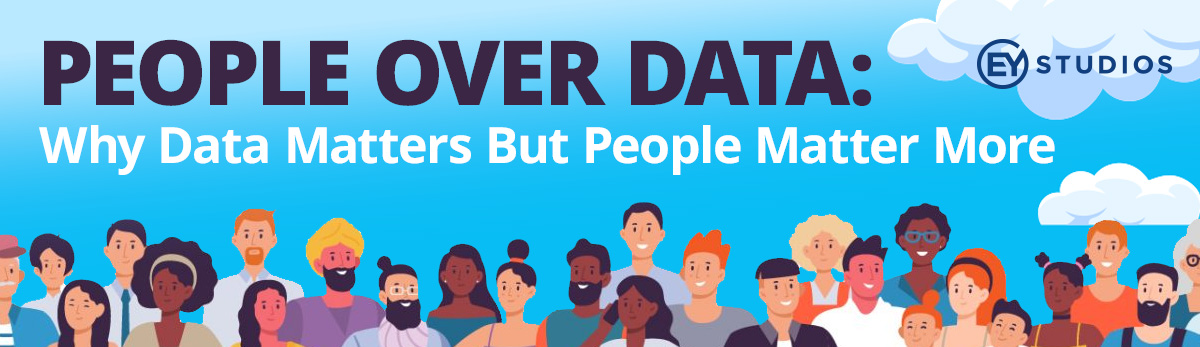
There’s been a lot of talk lately about data-driven decision-making. Many people seem to think that data is the key to success and that if we only make decisions based on data, we’ll be successful. However, this isn’t always the case. Data can be helpful in making decisions, but it’s not the only thing that matters. In fact, sometimes it’s more important to focus on people than on data.
Problems With A Data-Only Approach
One of the problems with a data-only approach is that it can lead to bad decision-making. This is because data can be misinterpreted, or used to support a pre-existing bias. For example, let’s say you’re looking at data that seems to show that people who buy your product are mostly men. Based on this data, you might make the decision to market your product mainly to men. However, you might be misinterpreting the data, and in reality, women are just as interested in your product. Or, you may go into the process with the bias that women don’t buy your products, and so you’re more likely to interpret the data in a way that supports your bias. Either way, basing decisions solely on data can lead to bad decision-making.
Here are some other ways that a data-only approach can cause problems:
- Data is also often limited. This is because it’s difficult to collect complete and accurate data sets. For example, let’s say you’re trying to gather data about how people use your website. However, you only have data from people who use the website on a desktop computer. This data is limited because you’re not considering the people who use your website on a mobile device, or those who don’t use it at all. As a result, your data-driven decision-making may be inaccurate.
- Data can also be manipulated. This is because people can choose what data to collect, and how to interpret it. For example, let’s say you’re looking at data that seems to show that your product is selling well. However, the data doesn’t show the whole picture. It only includes sales from one region, while excluding sales from other regions. As a result, the data is manipulated, and you may make decisions based on inaccurate information.
Geckoboard has a great article on common statistical fallacies that can occur with data including cherry-picking, gerrymandering, and the Cobra Effect. The Cobra Effect refers to a tale from the 1800s about the British Empire’s attempt to reduce cobra bite deaths in India. They offered a reward for every cobra skin brought to them but instead of encouraging the hunting of wild cobras, it encouraged cobra farming instead. When they realized what was happening, the government stopped the incentive. This caused all the cobra farmers to release their cobras leading to the release of cobras and an increase in the cobra population. When an incentive produces the opposite result intended, this is the Cobra Effect.
People Over Data
So, if data isn’t always the key to success, what is? The answer is people. People are the key to success because they’re the ones who use your products and services. They’re the ones who provide feedback, and they’re the ones who ultimately decide whether or not to buy from you. Therefore, it’s important to focus on people, not just data.
Here are some ways to do this:
- Talk to your customers and get feedback from them.
- Observe how people use your product or service.
- Ask questions and gather data, but also use your intuition and experience to make decisions.
- Don’t just focus on converting people into customers, but also focus on creating a good customer experience.
Data-Driven or Data-Guided?
So, should you be data-driven or data-guided? The answer is both. You should use data to guide your decisions, but you shouldn’t let it control your decisions. Instead, focus on people, and use data to support your decision-making. In conclusion, data is important, but people are more important.
By following this approach, you can avoid the problems that come with a data-only approach, and you can make better decisions for your business. Data can be used to support decision-making, but it’s not the only thing that matters. When making decisions, don’t forget to take into account the human factor. It’s often more important than the data. This is because people are the ones who use your products and services, and they’re the ones who ultimately decide whether or not to buy from you. Therefore, it’s important to focus on creating a good customer experience, not just on converting numbers from one column to another.
What do you think? Do you agree that people are more important than data? Let us know in the comments below. Have additional questions? Reach out to EYStudios for more information about how we approach data.